Source Precision Die Casting Aluminum Heatsink for Machinery Auto Parts
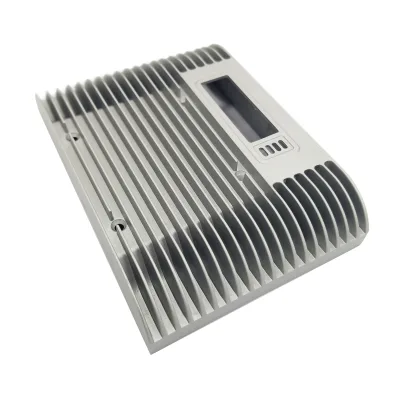
Find 30 verified options for precision die casting aluminum heatsink designed for machinery parts, auto components, and heat dissipation needs. Buyers can compare specifications like alloy grades, surface finishing, and tolerance grades to select the right supplier.
Key considerations
Products List




Comprehensive Sourcing Guide
Strategic Sourcing Guide for Precision Die Casting Aluminum Heatsinks
The global demand for high-efficiency thermal management solutions has elevated the importance of precision die casting aluminum heatsinks in industrial and consumer electronics sectors. For procurement professionals, navigating the supply chain for these components requires a rigorous understanding of manufacturing processes, material science, and compliance frameworks. This guide synthesizes available market data to provide a structured approach for sourcing high-quality aluminum alloy heatsinks, focusing on technical specifications, certification verification, and supplier evaluation strategies without relying on unverified commercial claims.
Technical Specifications and Manufacturing Processes
The core of sourcing a precision die casting heatsink lies in understanding the specific manufacturing capabilities and material properties that define the product. The market offers distinct variations in die casting methods, primarily categorized by the type of pressure chamber structure utilized. Buyers must distinguish between Hot Chamber Die Casting Machines and Cold Chamber Die Casting Machines, as each serves different material and volume requirements. Hot chamber systems are often associated with higher production speeds for specific alloys, while cold chamber systems are typically preferred for aluminum alloys requiring higher pressure and precision, minimizing the risk of die wear and ensuring structural integrity.
Material selection is equally critical. The primary material observed in this sector is Aluminum Alloy, specifically from the 6000 Series, which includes grades like 6063-T5. This series is favored for its excellent extrudability and corrosion resistance, making it ideal for heat dissipation applications. However, sourcing teams must also be aware of the presence of Zinc Alloy options in the broader market, which may be suitable for different thermal conductivity requirements or weight constraints. The tolerance grade is a key metric for precision; observed data indicates tolerance grades ranging from 4 to 8. A grade of 4 suggests a higher level of precision suitable for tight-fitting electronic assemblies, whereas a grade of 8 may suffice for general machinery parts.
Surface preparation and finishing processes significantly impact the thermal performance and longevity of the heatsink. Common surface preparation techniques include Oxygenation and Polishing. Following preparation, surface finishing methods such as Powder Spraying and Mechanical Polishing are applied. The choice of finish affects both the aesthetic appeal and the thermal emissivity of the component. For instance, mechanical polishing can enhance surface smoothness, while powder spraying provides a durable, customizable color finish that can also aid in heat radiation. The standard production model often cited includes specific identifiers like NM-DC10, HS-009, HS-91, HS-340, and HS-259, which buyers should use to cross-reference technical datasheets with supplier capabilities.
Compliance, Certification, and Quality Standards
In the B2B procurement landscape, compliance is not merely a regulatory formality but a prerequisite for market access and liability protection. When sourcing aluminum alloy heatsinks, buyers must verify that suppliers adhere to international safety and environmental standards. The observed certification landscape includes RoHS (Restriction of Hazardous Substances) and CE (Conformité Européenne), which are essential for products entering the European market. Furthermore, ISO 9001 certification is frequently cited as a benchmark for quality management systems, ensuring that the manufacturing process is consistent and controlled.
Additional certifications such as SONCAP, CIQ, and TUV may be relevant depending on the destination country. For example, SONCAP is a mandatory certification for products entering Nigeria, while CIQ relates to inspection and quarantine standards in China. The presence of these certifications on a supplier's documentation serves as a verification of their ability to meet diverse regulatory requirements. Buyers should explicitly request current certificates rather than relying on general claims, as certification status can vary between production batches or specific product lines.
The standard for the product itself often aligns with the material grade, such as 6063-T5, which dictates the temper and mechanical properties. However, many suppliers offer customized standards to meet specific client needs. In such cases, the procurement team must ensure that the customized standard is clearly defined in the contract and aligns with the intended application's performance requirements. The origin of the product, often traced to regions like Shandong or Qingdao in China, can also influence the regulatory framework the supplier operates under, necessitating a thorough review of local and export compliance protocols.
Cost Drivers and Economic Factors
Understanding the cost structure of precision die casting aluminum heatsinks is vital for budget planning and negotiation. The price range observed in the market spans from $0.10 to $32.00 USD, a wide variance that reflects differences in complexity, volume, material grade, and finishing requirements. Several factors drive these costs. First, the alloying ingredients and the specific grade of aluminum used directly impact the raw material cost. Second, the level of customization, including specific dimensions, tolerance grades, and surface finishes, adds to the manufacturing complexity and expense.
Minimum Order Quantity (MOQ) is another significant economic factor. The observed MOQ range is substantial, spanning from 1 unit to 10,000 units. This flexibility allows buyers to source small batches for prototyping or large volumes for mass production, but it also dictates the unit cost. Higher volumes typically result in lower per-unit costs due to economies of scale in die casting and machining. Additionally, the lead time, which ranges from 15 to 35 days depending on the specific order and supplier capacity, influences the overall cost of ownership. Rush orders or expedited delivery may incur premium charges, while standard lead times of 15-30 days are more cost-effective.
Packaging also contributes to the final cost. Options range from simple PVC and shrink film to more robust wooden cases or pallets. The choice of packaging depends on the fragility of the product and the shipping distance. For international shipments, wooden pallets or cases are often necessary to prevent damage, adding to the logistical cost. Buyers should evaluate the total landed cost, including packaging, shipping, and potential duties, rather than focusing solely on the unit price.
Typical Applications and Industry Requirements
Precision die casting aluminum heatsinks are versatile components used across a broad spectrum of industries. The primary application areas identified include Machinery Parts and Auto Parts. In the machinery sector, these heatsinks are integral to cooling hydraulic systems, electric motors, and industrial control units where thermal management is critical for operational efficiency. In the automotive industry, the demand is driven by the need for reliable cooling in electric vehicles, power electronics, and engine control modules.
Beyond these core applications, the versatility of aluminum profiles extends to Window & Door profiles, Decoration profiles, and Transport profiles. While these may seem distinct from heatsinks, the underlying material properties and manufacturing processes often overlap, allowing suppliers to offer integrated solutions. For instance, the 60 Series Window & Door Aluminium Profile indicates a specific dimensional standard that may be relevant for structural applications requiring thermal regulation. The ability to customize color and size further expands the application scope, allowing these components to be integrated into architectural elements or consumer electronics where aesthetics are as important as function.
The specific application dictates the required performance metrics. Auto parts, for example, may require higher tolerance grades and stricter certification standards due to safety regulations. Conversely, general machinery parts might prioritize cost-effectiveness and durability over extreme precision. Buyers must align their procurement strategy with the specific demands of their end-use application to ensure the selected heatsink meets all functional and regulatory requirements.
Supplier Evaluation and Quality Control
Evaluating potential suppliers requires a multi-faceted approach that goes beyond price comparison. Key attributes to assess include the supplier's machining capabilities, specifically their access to Machining Centers and CNC Machining equipment. These technologies are essential for achieving the high precision required for die casting parts. The presence of both Hot Chamber and Cold Chamber Die Casting Machines indicates a supplier's versatility in handling different materials and production volumes.
Quality control should be a central component of the supplier evaluation process. Buyers should verify the supplier's surface preparation and finishing capabilities, ensuring they can consistently deliver parts with the required Oxygenation, Polishing, or Powder Spraying treatments. The tolerance grade capability, whether 4 or 8, must be confirmed through technical audits or sample testing. Additionally, the supplier's ability to provide 100% OEM services suggests a high level of customization and flexibility, which is crucial for specialized projects.
Sample time is another critical metric for supplier evaluation. An observed sample time of 15 days provides a benchmark for the speed of prototyping and design validation. Buyers should compare this against their project timelines to ensure the supplier can meet critical path deadlines. The delivery time, ranging from 15 to 35 days, also plays a role in supply chain reliability. A supplier with a consistent track record of meeting these timelines is preferable to one with variable delivery performance.
Long-Term Procurement Considerations
Sourcing precision die casting aluminum heatsinks is not a one-time transaction but a long-term partnership that requires strategic planning. Buyers should consider the scalability of the supplier's production capacity to accommodate future growth. The ability to handle MOQs up to 10,000 units suggests that the supplier can support large-scale production runs, but buyers must verify their capacity to maintain quality during volume increases.
Customization is a key driver for long-term success. The availability of customization options for size, color, and standard allows buyers to adapt to changing market demands and product iterations. However, this flexibility must be balanced with the need for standardization to reduce complexity and cost. Buyers should work with suppliers to establish a balance between custom and standard components that optimizes both performance and efficiency.
Finally, the supply chain's resilience is paramount. Factors such as the origin of the product, typically China, and the specific locations like Shandong or Qingdao, can influence supply stability. Buyers should assess the supplier's risk management strategies, including inventory management and contingency planning for potential disruptions. By focusing on these long-term considerations, procurement professionals can build a robust supply chain that ensures the continuous availability of high-quality aluminum alloy heatsinks for their critical applications.
FAQs
What certifications are required for precision die casting aluminum heatsinks?
Required certifications include RoHS, CE, ISO 9001, SONCAP, CIQ, and TUV depending on the destination. These standards ensure compliance with environmental regulations and quality management systems for international trade.
Which die casting machine types are used for aluminum heatsinks?
Both Hot Chamber and Cold Chamber Die Casting Machines are utilized for production. Hot chamber systems suit specific alloys, while cold chamber systems are preferred for aluminum to ensure higher pressure and structural integrity.
Can the size and color of aluminum heatsinks be customized?
Yes, size and color are fully customizable to meet specific client needs. Buyers can specify dimensions and choose from various finishes like powder spraying or mechanical polishing to match aesthetic requirements.
What is the typical lead time for precision die casting orders?
Sample time is typically 15 days, with full delivery taking 15 to 35 days. The exact duration depends on the order volume, customization level, and the specific supplier's production capacity.
How does the tolerance grade affect the precision of the part?
Tolerance grades range from 4 to 8, with grade 4 offering higher precision for tight-fitting assemblies. Grade 8 is generally sufficient for general machinery parts where extreme precision is not critical.
What materials are commonly used for these heatsinks?
Aluminum Alloy, specifically the 6000 Series like 6063-T5, is the primary material. Zinc Alloy is also available as an alternative for different thermal conductivity or weight constraints.
Which surface finishing processes are available for aluminum profiles?
Available processes include Oxygenation, Polishing, and Powder Spraying. Mechanical polishing enhances smoothness, while powder spraying provides a durable, customizable color finish suitable for various applications.